
Why you should restore rather than replace your stone floor
Restoration, not replacement: the smarter way to bring tired stone back to life
When a stone floor becomes dull, stained, scratched or difficult to maintain, replacement may seem like the simplest answer. However, in many homes, stone floor restoration can deliver a cleaner, brighter and more refined result without the cost, waste and disruption of removing the original surface.
This is particularly relevant when renovating a period property, barn conversion or high-quality modern home. Existing marble, limestone, travertine, slate, terrazzo or other hard flooring may have far more potential than its current appearance suggests.
At Luxe Stone Restore, we assess the material, condition and finish before recommending the most suitable option. In many cases, restoring the floor lets you keep what is already there while improving its appearance and helping protect it for the future.
Restoration Can Cost Less Than Replacement
A new stone floor involves considerably more than the cost of the tiles. The overall price may include removal of the existing floor, disposal, subfloor preparation, new materials, delivery, fitting, grouting, sealing, and finishing.
Stone floor restoration usually works with the surface already in place. This can reduce the amount of material, labour and waste involved, making it a more practical choice for larger kitchens, hallways and open-plan areas.
Published UK cost guides, including [Checkatrade’s stone restoration guide](https://www.checkatrade.com/blog/cost-guides/stone-restoration-cost/) and [Stone Rescue’s pricing information](https://stonerescue.co.uk/pricing/), show that restoration is commonly priced by the square metre and can be significantly less than installing new natural stone.
The saving will depend on the size of the floor, the material, the level of staining or damage and the finish required. Even so, a professional assessment may show that a tired-looking floor needs specialist care rather than complete replacement.
Restoration can also help avoid the additional work that often comes with replacing a fitted floor. Kitchen units, appliances, skirting boards, doors and thresholds may all need to be moved or adjusted. Keeping the existing surface can make the project simpler and more controlled.
Original Flooring Often Adds Character
In a period or heritage property, the floor may be part of the building’s identity. Original flagstones, quarry tiles, Victorian tiles, aged limestone and worn marble can bring colour, texture and individuality that is difficult to recreate with modern materials.
Replacing an original floor may remove some of the character that made the property appealing in the first place. A new floor can look attractive, but it may not relate as well to the building's age, layout, and materials.
Restoration gives us the opportunity to improve the condition of the surface while respecting its existing character. The aim is not always to make an older floor look completely new. A more suitable result may be a cleaner, richer and more consistent appearance that still retains natural variation and signs of age.
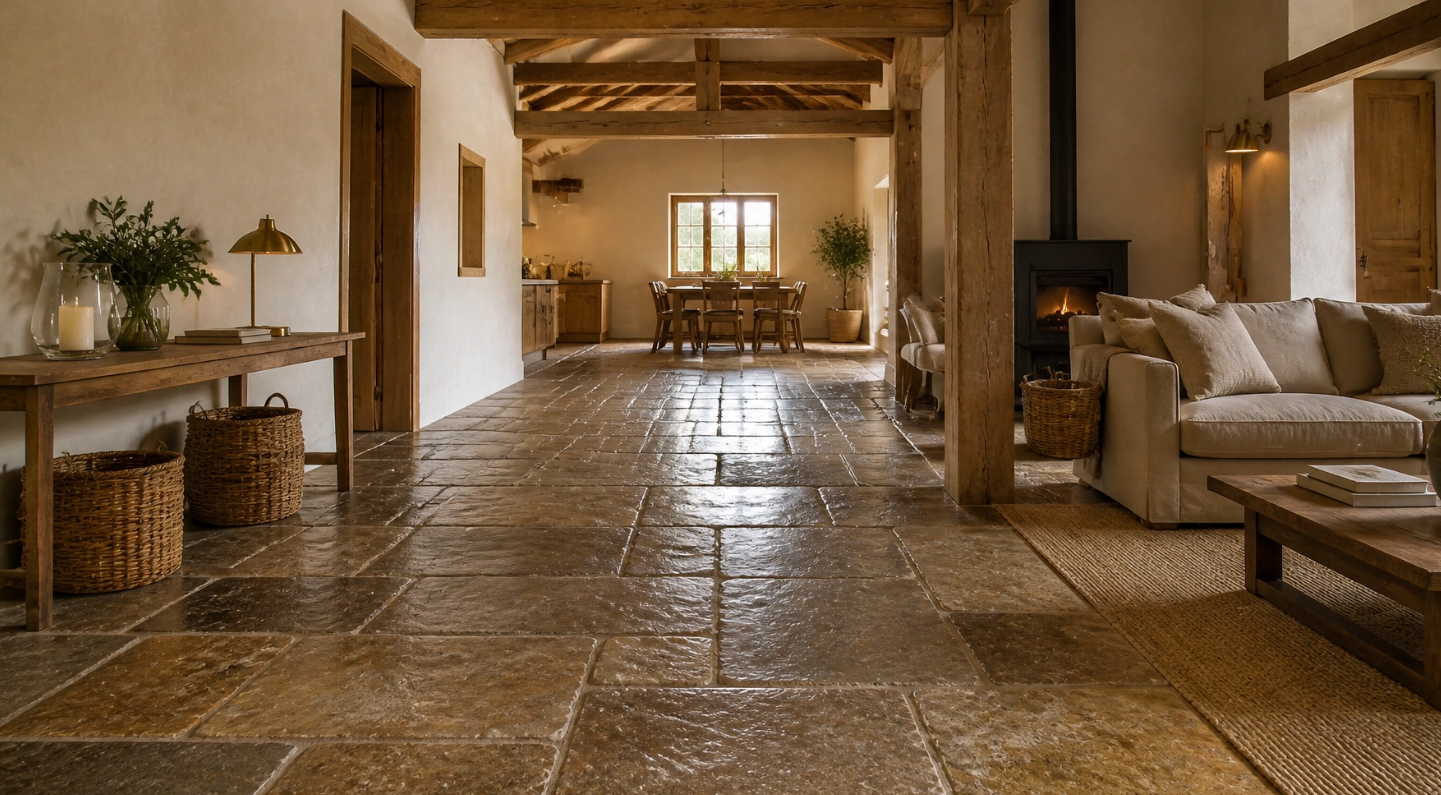
This approach is especially valuable for homeowners who want to preserve the character of a property in Hampshire, Wiltshire or Surrey. Original flooring can be an important feature, and careful restoration helps maintain the quality and authenticity of the wider interior.
Our [domestic stone restoration service](https://www.luxestonerestore.com/domestic-customers) is designed around this balance. We improve the appearance of the floor while taking account of the material, its condition and the character of the home.
Restoration Usually Means Less Disruption
Replacing a stone floor can be a major building project. The existing surface needs to be broken up and removed before the area can be prepared for new flooring. This may create dust, noise and delays, particularly if there are problems beneath the floor.
A kitchen or hallway may be difficult to use during the work. In some cases, furniture, appliances and fittings need to be removed, and the area may remain out of action until the new floor has been installed and finished.
Restoration is generally carried out in the existing space, helping to keep the work more focused. We take care around surrounding finishes and aim to minimise disruption. The exact timescale will depend on the size and condition of the surface, but restoration is often a more manageable choice for an occupied home.
This can be important during a wider renovation. If builders, decorators or kitchen fitters are already working on the property, restoring the existing floor may help reduce delays and avoid adding another large part to the programme.
The floor can also remain at a similar level to before. This may help avoid problems with doors, skirting boards and transitions between rooms.
It Is The More Sustainable Choice
Keeping an existing floor in use is usually more sustainable than removing and replacing it. Natural stone requires quarrying, cutting, finishing and transporting before it reaches a property. It is also heavy, so moving new and discarded materials can add to the environmental impact of a renovation.
Restoration helps reduce the need for new materials and keeps the original stone out of the waste stream. Instead of disposing of an entire floor because its surface has become worn, you may be able to extend its useful life through professional cleaning, repair, finishing and protection.
This is one reason restoration can fit well with a considered approach to home improvement. It lets you improve the room's appearance and practicality without automatically discarding materials that may still be structurally sound.
Sustainability should not be separated from quality. A well-maintained stone floor can continue to serve the property for many years. Proper care can also make the surface easier to clean, reducing the need for harsh or unsuitable products in everyday use.
Restoration Can Improve More Than Appearance
A worn floor is not only an aesthetic concern. Dull patches, ingrained dirt, old sealers, and uneven areas can make the surface harder to maintain. Stains may become more noticeable, and everyday cleaning may no longer produce a consistent result.
Professional restoration can address these issues together. We can improve the colour, smoothness, and overall consistency of the floor while recommending a finish that suits how the room is used.
A suitable protective treatment may help reduce the absorption of spillages and dirt. This can make routine maintenance easier and help the restored appearance last longer.
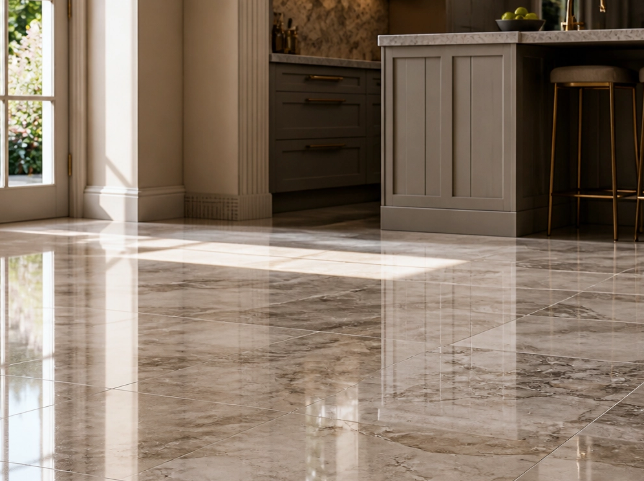
The right finish will depend on the material and the desired result. Some homeowners prefer a natural matte appearance, while others may favour a softer satin sheen or a more reflective polished finish. We will advise on the most suitable option rather than applying the same treatment to every floor.
Restoration Can Be Tailored to the Surface
Every stone floor is different. Marble may have etching or scratches, limestone may show staining or absorbency, while slate and flagstone may have textured surfaces that need a different approach.
The age of the floor, previous treatments and level of foot traffic will also affect the recommended solution. A floor in a quiet bedroom will have different needs from one in a busy kitchen entrance.
This is why we do not recommend choosing a treatment based only on a photograph or a general description. We assess the surface and explain what can realistically be achieved. Our aim is to provide a noticeable improvement while respecting the material and avoiding unnecessary work.
Our [stone floor restoration services](https://www.luxestonerestore.com/services) cover a wide range of surfaces, including marble, limestone, slate, porcelain, ceramic, terrazzo and other hard flooring. We also provide repairs, polishing, deep cleaning, finishing and resealing where suitable.
When Might Replacement Be Necessary?
Restoration is not the right answer in every situation. Replacement may be more appropriate when the floor has severe structural damage, widespread movement, serious damp problems or tiles that are breaking down throughout their thickness.
A major change to the room layout may also make a new floor more practical. For example, a renovation that involves moving walls, altering floor levels or redesigning an entire kitchen may require different materials or a new layout.
However, surface wear can often look worse than it is. Staining, scratches, dullness, old sealer and localised chips do not automatically mean that the floor needs to be removed.
A professional assessment can help establish whether the existing stone is suitable for restoration before you commit to a much larger replacement project. It gives you clearer information about the condition of the floor, the likely result and the options available.
Restore Before You Replace
If your stone floor has lost its colour, developed marks or no longer reflects the quality of your property, restoration is worth considering before replacement.
It can help you:
- Spend less than a full replacement project
- Preserve original character and material
- Reduce dust, noise and time out of use
- Avoid sending an entire floor to waste
- Improve the finish and make maintenance easier
- Protect the surface against future wear
At Luxe Stone Restore, we provide a careful, specialist-led service for homeowners and renovators who want informed advice. We will assess the surface, discuss the finish you want and recommend the most suitable cleaning, restoration, polishing, repair or sealing solution.
If you are considering replacing a tired stone floor, restoring what you already have may provide the practical, durable and lasting result your property needs.