Victorian Tile Restoration: Bringing Original Hallway Tiles Back to Life
Preserving the character, colour and history of original floors.
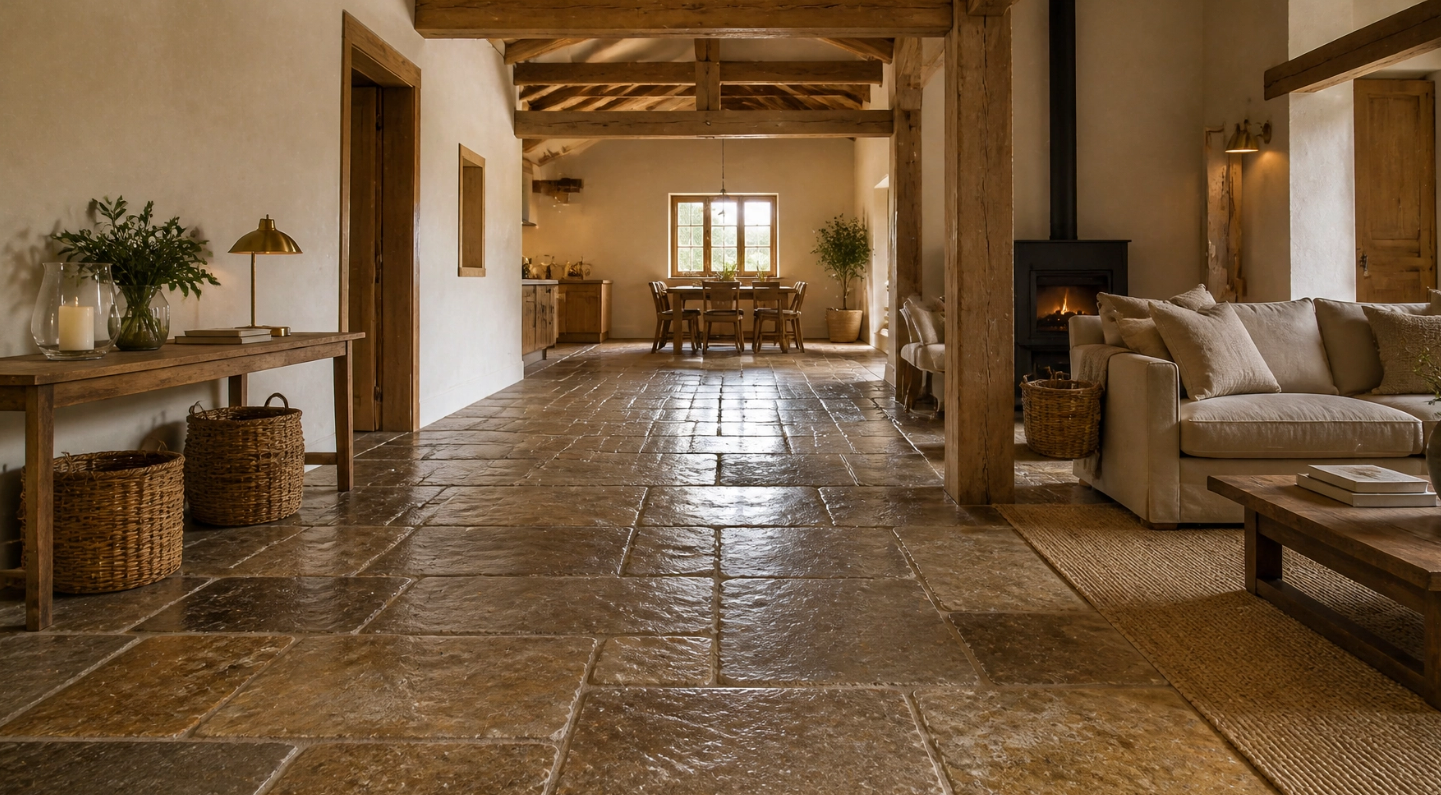
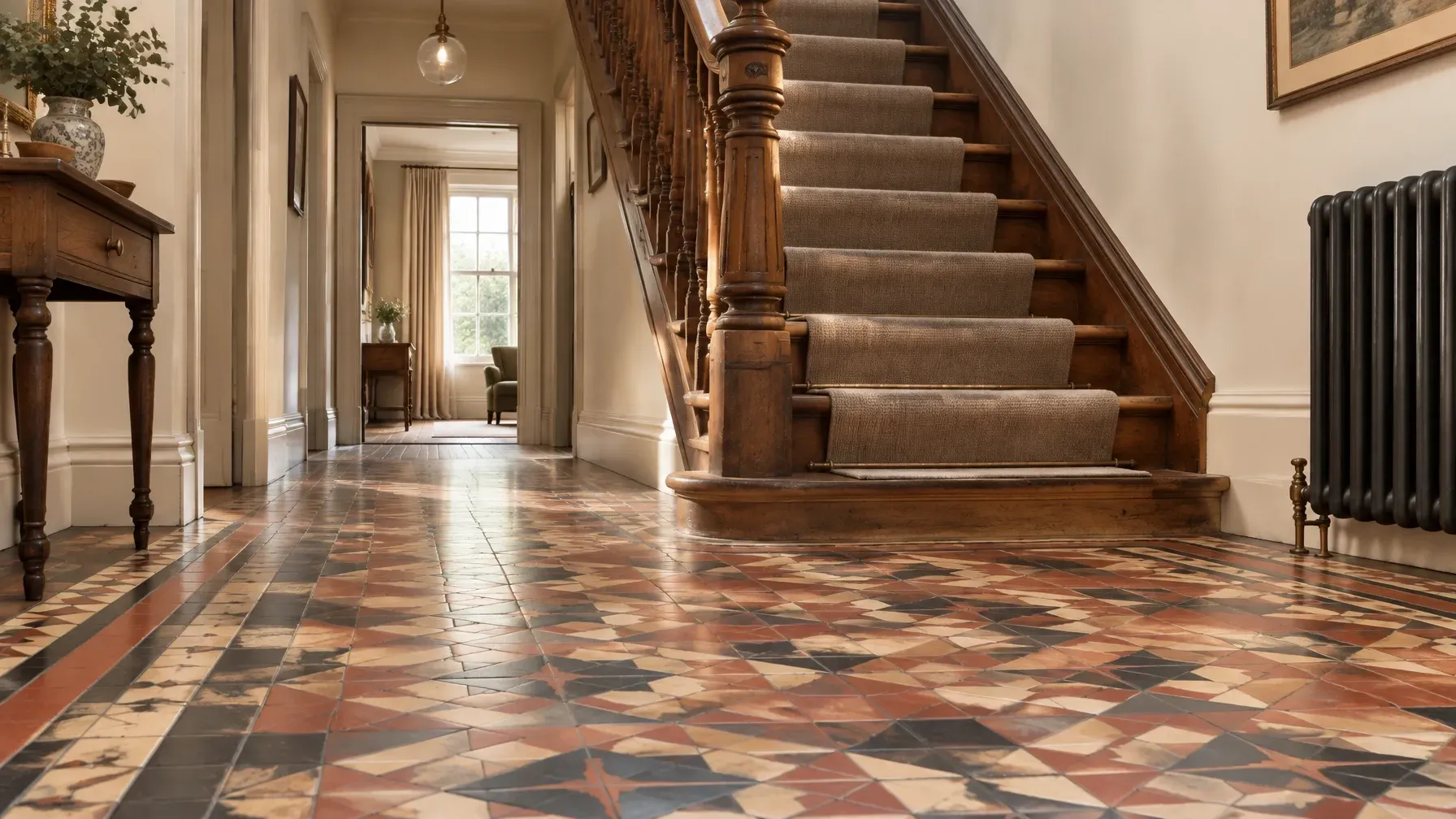
Original Victorian hallway tiles can be one of the most distinctive features in a period property. Whether they belong to a Victorian terrace, an Edwardian home, a country house or a converted barn, their pattern, colour and natural variation often contribute to the character of the entire entrance.
Over time, however, these floors can become dull, stained or covered with old paint, cement residue, adhesive and layers of unsuitable polish. It is easy to assume that the tiles need to be lifted and replaced.
In many cases, they do not.
Professional **Victorian tile restoration** can improve the appearance and condition of an original floor while preserving the details that make it part of the property’s history. The aim is not to make an old floor look artificially new. It is to create a cleaner, brighter and more consistent finish that still feels appropriate to the building.
Why Original Victorian Tiles Are Worth Preserving
Original encaustic and geometric tiles were made to form part of the structure and identity of a property. Their colours, borders and patterns were often selected to complement the entrance, staircase and wider architectural style.
Modern replacement tiles may look similar, but they rarely reproduce the exact scale, variation and ageing of an original floor. Replacing the tiles can also remove an important part of the building’s character.
This is particularly relevant when renovating older properties in Hampshire, Wiltshire and Surrey. A period hallway may have survived several changes of ownership, redecoration and floor coverings. The tiles beneath a carpet or vinyl covering may be original to the house.
Careful restoration allows us to improve the floor without removing that history. We can focus on preserving its colour, pattern, texture and natural signs of age rather than applying a treatment designed to make every surface look identical.
Our approach is similar to the way we handle other heritage and premium flooring. We provide
specialist stone floor cleaning and restoration
services for surfaces where the material, condition, and existing finish all need to be considered before work begins.
What Makes Victorian Tiles Look Dull or Stained?
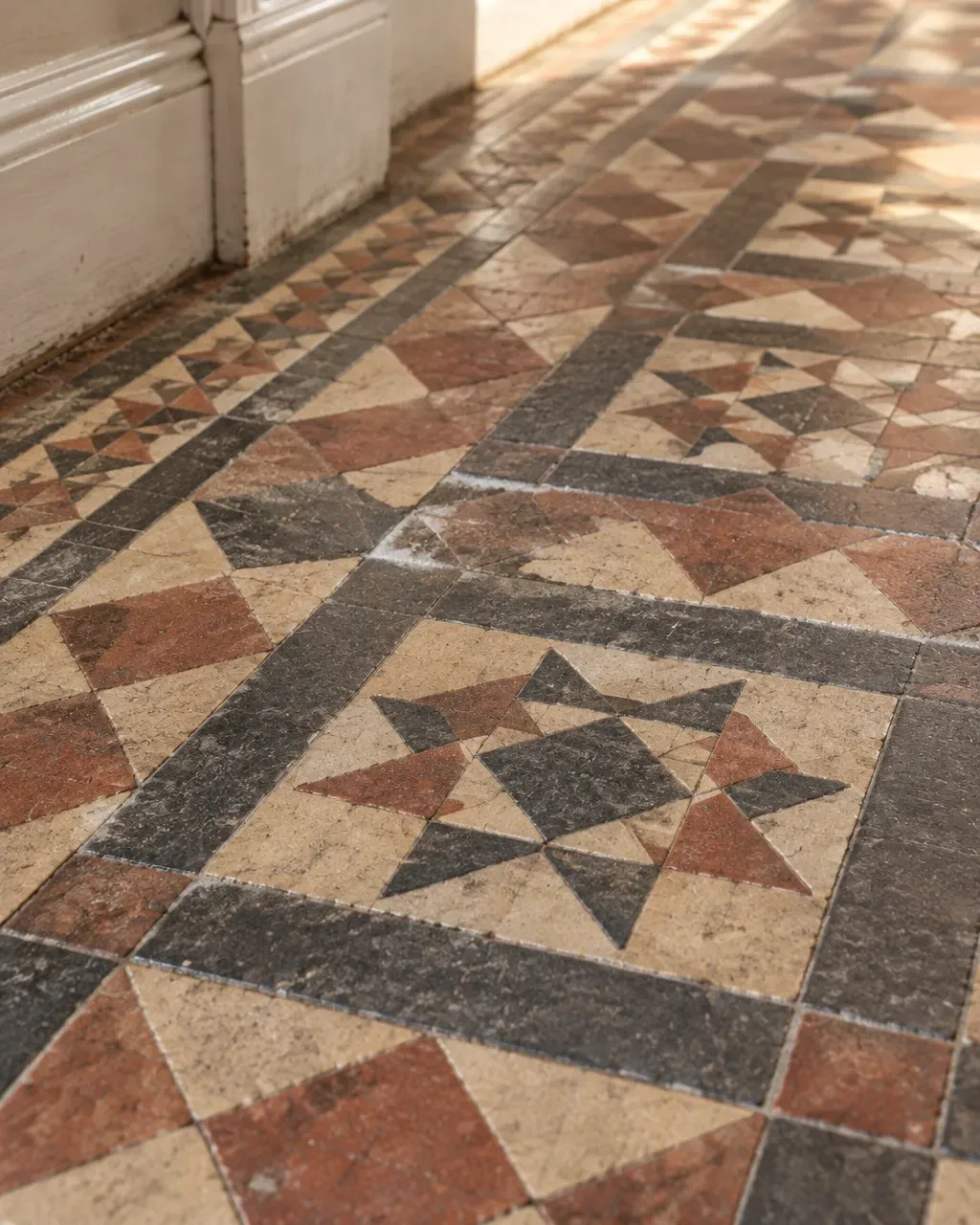
A tired-looking hallway floor may have several different problems at the same time. Everyday foot traffic can work grit and dirt into the surface, while years of mopping can leave behind cleaning residue.
Common causes of dullness and discolouration include:
- Ingrained dirt and household grime
- Worn or discoloured polish
- Old sealers that have broken down
- Cement or grout residue from building work
- Paint, adhesive or carpet underlay residue
- Water staining and areas of uneven wear
- Salts caused by moisture moving through older floors
- Chips, cracks and worn or missing grout
Some original tiles are porous, so spills can absorb into the surface if the floor has not been suitably protected. Other floors may have been sealed with a product that is too heavy, has become patchy or is no longer allowing the surface to look natural.
The visible problem does not always show the full condition of the floor. A dark patch may be surface dirt, old coating or moisture-related staining rather than permanent damage. This is why we assess the floor before recommending cleaning, repair or sealing.
Why Harsh Chemicals and DIY Stripping Can Cause Damage
Victorian tiles need careful treatment. Strong acids, bleach, aggressive degreasers and abrasive pads can alter the colour, roughen the surface or damage the edges of individual tiles.
DIY stripping can also create uneven results. One area may be cleaned more heavily than another, leaving patches that are difficult to blend. Excessive water can move dirt into the joints, loosen bedding or bring salts to the surface. Wire wool and hard abrasives may leave scratches that become more visible after cleaning.
Cement residue needs particular care. A cement film or grout haze may require targeted removal, but using a strong product across the whole floor can affect the tile surface and surrounding grout.
We recommend testing any treatment in a small, discreet area first. This helps establish how the tiles respond and whether the proposed method will deliver the right level of cleaning without removing too much of the original surface.
What Careful Victorian Tile Restoration Involves
Every floor is different, but a professional restoration normally begins with a detailed assessment. We look at the type of tile, the pattern, the condition of the joints, previous coatings, moisture concerns and the result you want to achieve.
The work may include several carefully selected treatments.
Assessment and Test Cleaning
We identify the main causes of dullness, staining and residue before deciding what the surface needs. Test areas help us compare methods and confirm that the colour and finish are responding as expected.
This assessment-led approach is important in older homes because the floor may not have a modern damp-proof membrane. A suitable treatment for a dry, stable floor may not be appropriate where moisture or salts are present.
Dirt, Paint and Residue Removal
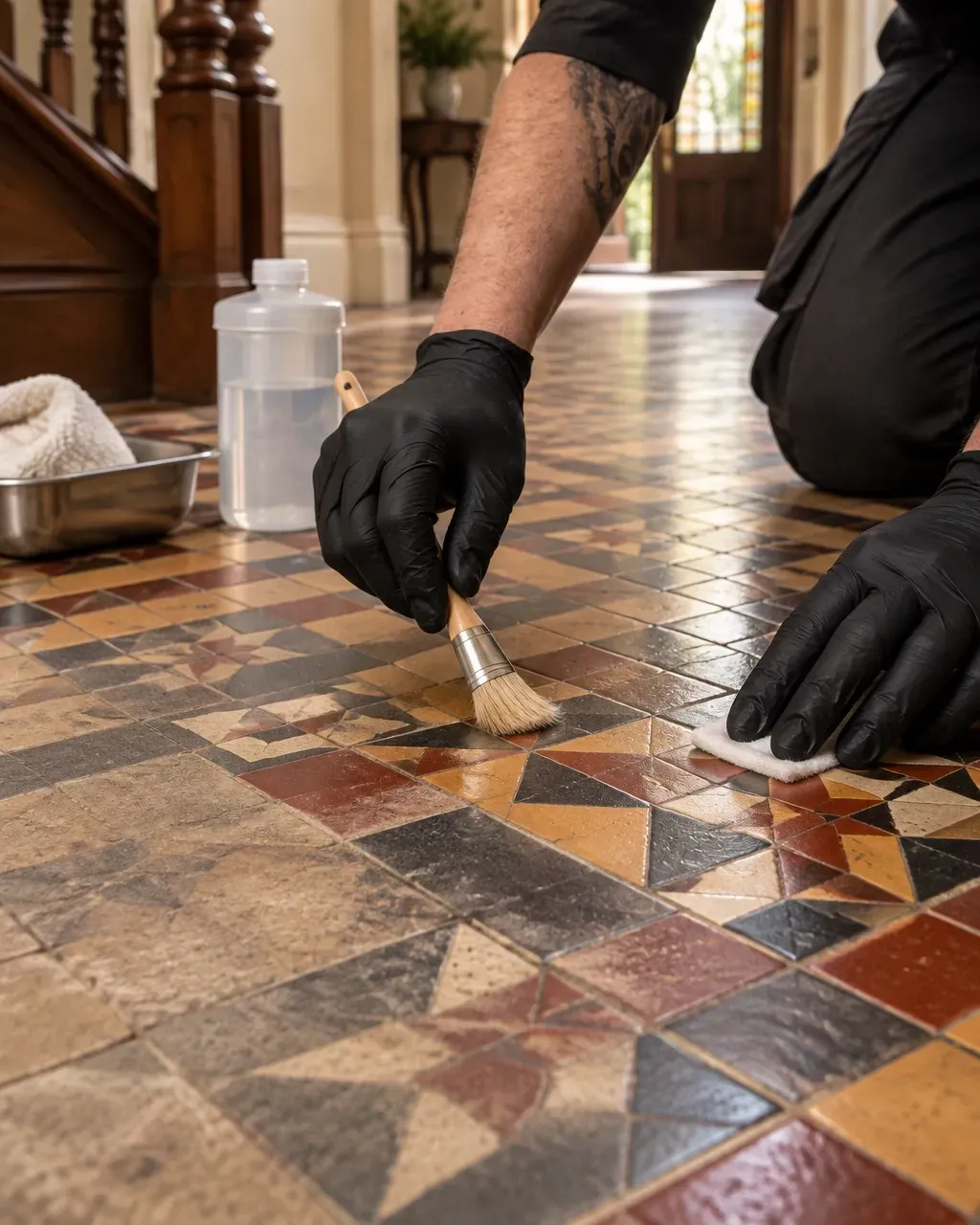
Professional cleaning can lift ingrained dirt, old polish, paint marks and other surface residues that everyday products cannot remove. We work in controlled sections, using suitable products and methods for the material.
Cement and adhesive residues may need more targeted attention. Removing them carefully can reveal clearer tile edges and restore definition to the original pattern without unnecessarily grinding the surface.
Repairs to Damaged Tiles
Some floors have cracked, chipped or loose tiles. Localised repairs may be possible where the damage is limited. In other cases, individual tiles can be lifted, stabilised or replaced with suitable reclaimed or matched materials.
The objective is to improve the overall consistency of the floor while retaining its original appearance. A repaired historic floor should still look like part of the property, not like a new installation.
Re-Grouting and Joint Repairs
Worn, missing or heavily stained grout can make a hallway look untidy even after the tiles have been cleaned. Carefully removing loose material and renewing selected joints can improve the definition of the pattern and help the floor look more complete.
We do not assume that every joint needs to be removed. Sound original material may be best left in place. The extent of re-grouting will depend on the condition of the floor and the result required.
Suitable Sealing
Sealing can help reduce the absorption of spills and make routine maintenance easier, but it is not automatically suitable for every Victorian floor.
Where the tiles are dry and stable, a breathable impregnating sealer may provide useful protection without creating a heavy surface coating. If moisture or salt movement is present, sealing too soon may trap the problem beneath the surface.
We will advise on whether sealing is appropriate, which finish is suitable and how the floor should be maintained afterwards. The result may be a natural matt appearance, a soft satin finish or another carefully selected level of sheen.
Conservation or Full Grind-Back?
There is an important difference between sympathetic conservation and a full grind-back restoration.
A conservation approach uses the lightest effective treatment. It aims to remove dirt, residue and unsuitable coatings while retaining the surface, colour variation and signs of age. This is often the preferred option for original Victorian and Edwardian tiles.
A full grind-back involves removing part of the surface through mechanical abrasion. This can be appropriate for some modern or heavily damaged floors, but it is not always suitable for historic tiles. It may soften tile edges, reduce the depth of the original surface or change the character of the pattern.
For this reason, we do not recommend aggressive grinding as a standard solution. We will consider the material, condition and intended result before deciding whether any mechanical treatment is necessary.
The same principle applies to other hard surfaces. Marble polishing, limestone cleaning, travertine restoration and wider
stone floor restoration all need to be matched to the surface rather than treated as one generic process.
Restoration Instead of Replacement
Replacing a Victorian hallway floor can involve much more than purchasing new tiles. The existing floor may need to be lifted, removed and disposed of before the base is prepared. Thresholds, skirting boards, doors and adjoining floor levels may also need adjustment.
Restoration works with the surface already in place. This can reduce waste, limit dust and keep the project more focused. It may also avoid removing a floor that is structurally sound but has a tired or neglected surface.
The cost will depend on the size of the hallway, the condition of the tiles, the amount of residue or damage and the finish required. A small area with heavy cement residue may need a different level of work from a larger floor with general dullness.
A professional assessment gives a clearer understanding of what can be achieved before a decision is made. In many cases, the cost and disruption of restoration are more manageable than full replacement, particularly where the original tiles are an important feature.
How Long Does Victorian Tile Restoration Take?
The timescale depends on the size and condition of the floor. Cleaning, residue removal, repairs, re-grouting and sealing may each require different stages, with drying time between treatments.
We plan the work around the property and explain what access will be needed. Furniture and hallway items may need to be moved, and the floor may have limited use while treatments dry or settle. Our aim is to keep disruption controlled and protect surrounding walls, woodwork and finishes.
We will provide practical guidance before work begins so that the restoration can be planned alongside decorating, building or wider renovation work.
Caring for the Floor Afterwards
A restored Victorian tile floor should be maintained with suitable, measured care. Regular sweeping or vacuuming helps remove grit before it can work into the surface. Routine cleaning should use a compatible product and limited water rather than strong household chemicals.
Bleach, vinegar, abrasive pads and steam cleaning may cause problems on historic tiles or affect the protective treatment. We can advise on suitable aftercare for the material, finish and level of foot traffic.
Good maintenance helps preserve the cleaner appearance and reduces the need for aggressive cleaning in the future.
Request a Careful Assessment
Original Victorian tiles should not be replaced simply because they look dull, stained or neglected. In many cases, professional restoration can improve their colour, cleanliness and consistency while preserving the character that makes them valuable.
At Luxe Stone Restore, we assess the floor before recommending cleaning, residue removal, repair, re-grouting or sealing. We will explain the suitable options and advise whether a conservation approach or more extensive restoration is appropriate.
If a hallway floor has been uncovered beneath carpet or vinyl, or if an original tiled entrance has lost its appearance over time,
contact us to request an assessment. We provide careful, specialist-led advice for period and premium properties across Hampshire, Wiltshire, Surrey and surrounding areas.